Update to Theories of Recovery in Dog Bite Cases
Elliot J. Vanier, Esq. • May 27, 2025
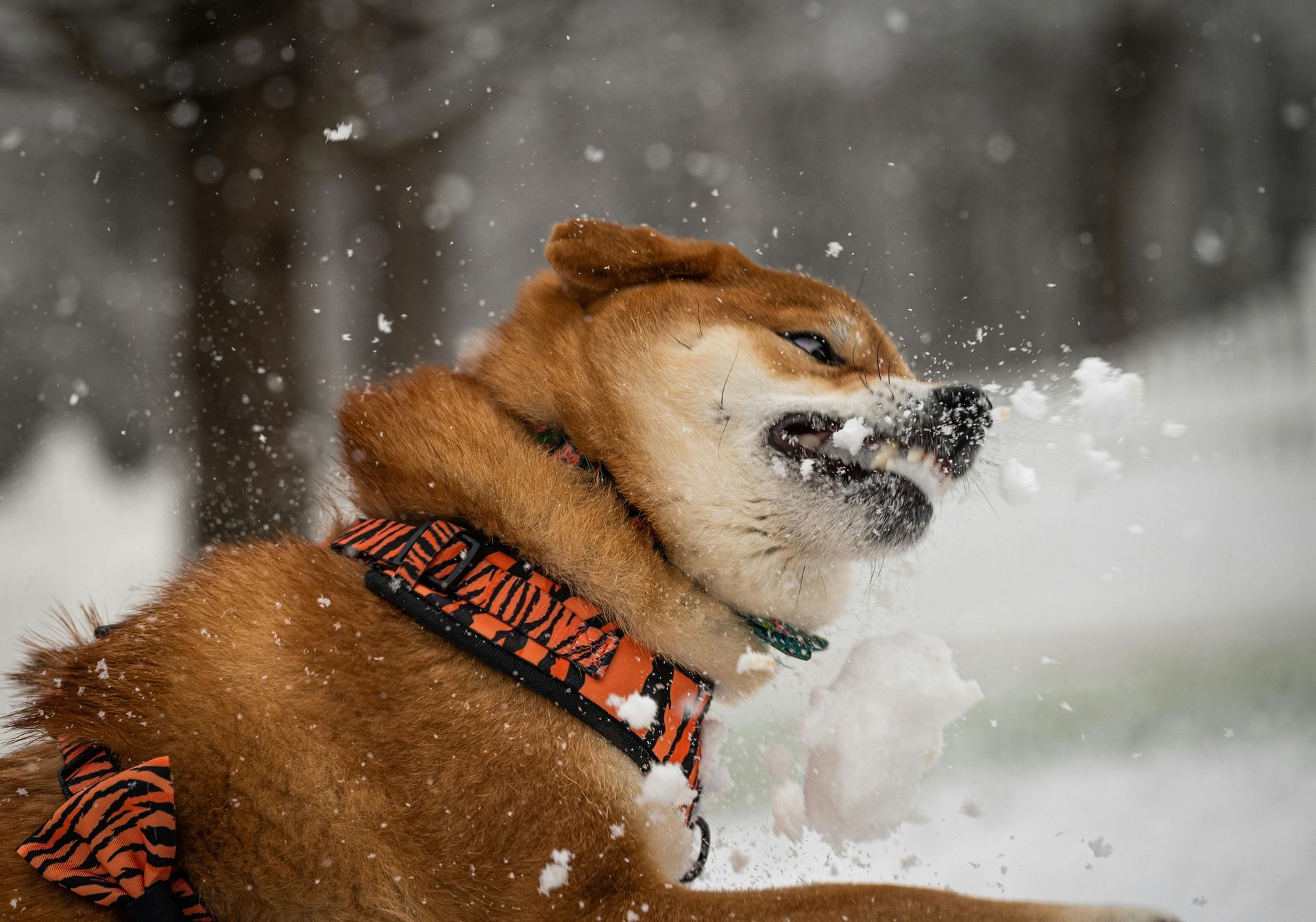
Dog biting snow

In a landmark decision issued on April 17, 2025, the New York State Court of Appeals broadened legal rights for individuals injured by domestic animals.


The Court’s ruling in Flanders v. Goodfellow overturns the long-standing precedent that dog owners could only be held responsible if the owner knew of or should have known of prior bad behavior, or “vicious propensities.” Without proof that the owner knew or should have known of their animal’s vicious propensities, plaintiffs of dog-bite cases were often barred from being eligible for any financial recovery.


With the new ruling, New York Courts now allow victims to seek recovery for their injuries from a pet owner’s negligence in their duty to prevent their animal from causing harm, even if the pet has no prior history of bad behavior, which will act to expand pet owner liability when their pets injure a person.


The Old Rule: “One Free Bite”


The old rule played out to more or less permit one free “bad act,” including not only bites but jumping, running wildly free, and other dangerous propensities that expose people to the dangers of an animal. No matter the behavior, under the old rule, the owner would not be held responsible unless the injured party could prove the owner was aware the dog had a history of problems.


The old rule often made establishing liability a tall order for injured plaintiffs, who often have little or no information about the dog that injured them, especially before filing a lawsuit. An owner who professed their animal had never done anything dangerous before and where records did not contradict the owner often had a good defense to a claim.


If an owner knew of a dog’s vicious propensities, typically a prior bite or knowledge of conduct such as lunging, snapping, or barking aggressively, the owner could be held responsible for injuries caused by the dog, even if the owner did not act negligently.


For example, if the owner of “Chompy” was aware that Chompy had bitten someone before, the next time Chompy injured a person, Chompy’s owner would be held strictly liable for the injuries, regardless of the measures taken by Chompy’s owner to prevent the injury.


Conversely, if Chompy’s owner did not know or did not have reason to know of past instances of Chompy causing injury, it would not matter whether Chompy’s owner was negligent or not towards the person injured. The plaintiff would be barred from recovering under a negligence claim, even if Chompy’s owners were negligent, because they were not “on notice” of Chompy’s dangerous propensities.


The Court of Appeal’s ruling in Flanders v. Goodfellow recognized the unfairness of the strict liability rule to plaintiffs who may be seriously injured, but barred from recovery where they cannot prove the dog or animal’s past dangerous propensities.


Understanding the New Implications for Dog Owner Liability in New York


The Court overturned its own prior decisions, recognizing that the prior caselaw unfairly placed the burden of injuries on those injured while sometimes giving a free pass to negligent dog owners.


The landmark decision underscores the importance of understanding the legal responsibilities associated with dog ownership. It is also an important precedent for those injured by animals due to the negligence of their owners. For those injured by an animal, typically a dog, who want to bring a claim, it becomes even more important to select an attorney familiar with animal injury/dog bite cases and how to handle them.


Overview of the Case


The plaintiff, Jennifer Flanders, was a postal carrier bitten by a dog owned by the defendant, Thomas Goodfellow. Flanders approached the porch of a home to make a delivery and upon opening the door, defendant’s dog went out past him, lunging toward plaintiff and biting her shoulder. She suffered a severe injury that required surgical repair. The plaintiff pursued a claim in strict liability, stating the owner knew of the dog’s “vicious propensities.” The plaintiff also made a claim for the owner’s negligence in failing to restrain the dog and permitting him to run outside.


Evidence was presented that when other postal workers approached the property previously, the dog could be seen lunging at the window, growling, snarling, and biting at the glass. One postal worker described it as the most aggressive dog he had ever encountered on his route.


Despite this evidence, the lower Court dismissed the plaintiff’s claim, saying that the plaintiff had failed to prove that the owner was home and witnessed the dog’s prior behavior. The claim that the owner was negligent in failing to restrain the dog was also dismissed as a claim not permitted in New York. The Appellate Court agreed with the trial level Court’s Decision.


The Court’s Decision


The Court of Appeals, the highest New York State Court, reversed the long standing rule that a dog-bite victim’s only path to recovery is through strict liability and proving that the subject animal had vicious propensities of which its owner knew or should have known.


Dog owners can now be held liable for their negligence in controlling their animal to prevent injury to other persons. The Court of Appeals ruled that dog owners can be liable for injuries caused by their pets when they knowingly fail to manage their animals responsibly. The Court recognized that, “Tort law seeks to incentivize us to be mindful of the risk that our behavior might harm others by imposing a duty to act with due care … When people go about their daily lives, the law generally requires them to take reasonable steps to prevent foreseeable harm.”


Further, the Court held that the rule requiring proof of previous behavior lead to outcomes which were “unjust” at times. It should be for a jury to decide if the incident resulted from “dogs just being dogs” or from the negligent failure of the owner to properly supervise his pet.


The ruling sets forth a clear standard for negligence; dog owners are expected to possess knowledge of their dogs’ behavior. If a dog owner fails to take reasonable precautions, the owner may be found negligent even if the dog hasn’t acted aggressively in the past.


Pursuant to the Flanders ruling, a plaintiff who is injured by a domestic animal now has a choice. “If the owner knew or should have known the animal had vicious propensities, the plaintiff may seek to hold them strictly liable. Or they can rely on rules of ordinary negligence and seek to prove that the owner failed to exercise due care under the circumstances. Of course, a plaintiff might also assert both theories of liability, as Flanders, the postal carrier, chose to do. The Court emphasized the duty of dog owners to ensure their pets are safe around people, particularly in public spaces.


This is an essential clarification for personal injury claimants, as it opens a new avenue for plaintiffs who may have been injured by otherwise “friendly” dogs or dogs they cannot prove had prior problems, liability will no longer depend solely on past behavior but also on the owner’s duty to manage their pet responsibly.


Implications for Dog Bite Personal Injury Claims


Based on the new Court precedent from Flanders, dog bite plaintiffs now have two (2) approaches to recovery under NY Law.


1)   Victims of an animal-induced injury can recover damages if the owner of the animal knew or should have known that the animal had “vicious propensities;” and/or


2)   Victims of an animal-induced injury can recover damages if the owner of the animal was negligent and failed to exercise due care under the circumstances that caused the injury.


What’s a person injured by a dog or pet to do?


           With these recent and significant changes to the law, it is very important that an injured person reach out to attorneys experienced in handling animal injury and dog bite cases as soon as practicable. The attorneys at Flink Maswick Law PLLC are pleased to discuss your potential case!

Happy 4th of July with fireworks, U.S. flag, and “Celebrating 250 Years of America’s Independence” text
By Flink Maswick Law July 3, 2026
From all of us at Flink Maswick Law, we wish you and your family a safe, happy, and memorable Fourth of July weekend! As we celebrate the freedoms we enjoy and honor those who have served our country, we hope you have the opportunity to relax, spend time with loved ones, and enjoy all that makes this holiday special. Our offices are closed today, Friday, July 3, 2026, in observance of the Independence Day holiday. We will reopen on Monday, July 6, 2026, at 8:30 a.m. Thank you for your continued trust and support. We wish everyone a safe and wonderful holiday! Happy Fourth of July!
By Flink Maswick Law PLLC June 21, 2026
This Father’s Day, all of us at Flink Maswick Law honor the fathers, grandfathers, stepfathers, and father figures who help shape our families and communities throughout the Adirondacks and Upstate New York. Today we celebrate the men who lead by example, offer steady support, share their wisdom, and create lasting memories with those they love. Fathers play an invaluable role in the lives of their families. Whether you’re spending the day fishing, hiking, grilling with family, enjoying time on the lake, or simply relaxing with loved ones, we hope your Father’s Day is filled with laughter, happiness, and special moments.  From all of us in our Lake Placid, Tupper Lake, and Albany offices — Happy Father’s Day!
Flink Maswick Law PLLC logo
By Flink Maswick Law PLLC June 18, 2026
Flink Maswick Law PLLC's offices will be closed on Friday, June 19, 2026 in recognition of Juneteenth, a federal holiday. Our offices will reopen on Monday, June 22, 2026 at 8.30 AM. Thank you.
By James L. Maswick and Elliot J. Vanier June 4, 2026
On May 27, 2026, New York State Governor Kathy Hochul signed into law significant amendments which impact the ability of parties injured in automobile accidents to recover money damages. Three major changes have gone into effect, including the elimination of an injury category to qualify for non-economic damages, a cap to a plaintiff’s recovery who is convicted of certain crimes out of the accident, and changes to a plaintiff’s right to recovery where plaintiff holds the majority at fault. These changes are being explained in a series of three blog posts. This third post will review the newly installed bar on recovery if the plaintiff is the party with a majority of the fault. Modified Comparative Negligence for Automobile Cases New York has historically followed a pure comparative negligence system, under which a plaintiff’s recovery is reduced by his or her percentage of fault but previously, the plaintiff was never completely barred from recovery if any percentage of the fault for the accident was placed on the defendant. One of the best ways to explain what the above means is an example. Let’s say Joe is speeding, going 50 miles per hour in a 30 mile per hour zone. Joe is also talking on a cell phone while driving, actually videochatting with his friend. Joe comes to an intersection that has a traffic light at it and Joe has the green light. As Joe goes through the intersection, Harold is driving on a cross street and runs through a red light. Joe’s car and Harold’s car collide, and Joe breaks his arm in the accident. Joe brings a lawsuit against Harold. The jury finds that Joe was 60% at fault for the accident – going double the posted speed and, come on Joe, videochatting while driving(!), but finds Harold 40% at fault because he ran a red light. The jury finds Joe was damaged in an amount of $100,000. In this scenario, since Joe was awarded $100,000 in damages but Harold was found only 40% at fault, Joe would have received $40,000 from Harold’s insurance company. However, now, Joe would not recover anything from Harold, because Joe was more at fault than Harold. The new legislation creates an exception for automobile personal injury actions governed by the No-Fault Law. Rather than adopting a straightforward 50-percent bar, the statute CPLR 1411(b) provides: “In any action to recover damages for personal injury subject to the No-Fault Law, the culpable conduct attributable to the claimant shall bar recovery if the culpable conduct attributable to the claimant is greater than the culpable conduct of the person against whom recovery is sought or is greater than the combined culpable conduct of the persons against whom recovery is sought.” CPLR 1411(b). The above new statute is not applicable to any other areas of law other than motor vehicle accidents. Pure comparative fault continues to exist in other areas of personal injury law. The practical implications of this language remain uncertain, particularly in multi-vehicle collisions. Questions arise where a plaintiff’s fault exceeds that of one tortfeasor but is less than that of another. In such circumstances, issues concerning which defendants remain liable and how any unrecoverable share of fault is allocated will likely require judicial interpretation. Continued Development from Change in Law  These changes to NY automobile liability law raises many questions for plaintiff attorneys, which will be answered through future litigation and court decisions. If you or a loved one has been injured in a motor vehicle accident, it is important you contact an experienced law firm, like Flink Maswick Law PLLC, who can help you understand your rights to recovery.
By James L. Maswick and Elliot J. Vanier June 3, 2026
On May 27, 2026, New York State Governor Kathy Hochul signed into law significant amendments which impact the ability of parties injured in automobile accidents to recover money damages. Three major changes have gone into effect, including the elimination of an injury category to qualify for non-economic damages, a cap to a plaintiff’s recovery who is convicted of certain crimes out of the accident, and changes to a plaintiff’s right to recovery where plaintiff holds the majority at fault. These changes are being explained in a series of three blog posts. This second post reviews the newly placed cap on non-economic recovery for a plaintiff convicted of certain offenses. $100,000.00 Cap on Non-Economic Damages for Certain At-Fault Plaintiffs The law imposes a limited $100,000.00 maximum ability to recover on pain-and-suffering damages for certain plaintiffs whose conduct contributed to the accident. The cap applies when a plaintiff: Was operating an uninsured vehicle that he or she was responsible for insuring, unless the lapse in coverage lasted fewer than 30 days; Was operating a vehicle while impaired and is subsequently convicted of the impairment-related offense; or Was operating a vehicle during the commission of a felony, or while fleeing immediately from the commission of a felony, and is subsequently convicted of that felony.  The cap applies only to claims for non-economic damages and does not affect wrongful death actions. It is important that your attorney either has experience in criminal law or works closely with your criminal attorney if you are injured in a motor vehicle accident and charged with a DWI or a felony arising from the same accident. There may be limited circumstances in which this issue arises, but if you are injured in a motor vehicle accident, it is important you contact an experienced law firm to educate you on your rights to recovery. Part 3 to come in this series.
By James L. Maswick & Elliot J. Vanier June 2, 2026
On May 27, 2026, New York State Governor Kathy Hochul signed into law significant amendments which impact the ability of parties injured in automobile accidents to recover money damages. Three major changes have gone into effect, including the elimination of an injury category to qualify for non-economic damages, a cap to a plaintiff’s recovery who is convicted of certain crimes out of the accident, and changes to a plaintiff’s right to recovery where plaintiff holds the majority at fault. These changes will be explained in a series of three blog posts. This first post covers perhaps most dramatic change to New York motor vehicle accident personal injury litigation, the elimination of the 90/180-Day serious injury category. Elimination of the 90/180-Day Serious Injury Category For the vast majority of personal injury cases involving motor vehicle crashes, plaintiffs seek to recover damages associated with pain and suffering for the injuries they have suffered. Simply receiving economic damages, such as lost wages, is helpful but does not fully compensate an injured plaintiff for what they have been through as a result of the negligence of another driver. In most situations, to bring a lawsuit that seeks pain and suffering damages, a plaintiff must have suffered what is known as a serious injury under the New York State Insurance Law. A serious injury is statutorily defined as: Death; Dismemberment; Significant disfigurement; Fracture; Loss of Fetus; Permanent Loss of use of a body organ, member, function or system; or Permanent consequential limitation of use of body organ or member; or Significant limitation of use of a body function or system. Previously, there was a ninth category; a plaintiff could recover damages from the defendant driver and satisfy the “serious injury threshold” by demonstrating a medically determined, non-permanent injury or impairment that prevented the performance of substantially all of plaintiff’s customary daily activities for at least 90 of the 180 days immediately following the accident. However, the new legislation removes the 90/180-day category from the definition of “serious injury” under New York Insurance Law § 5102(d). This is a significant change that will cause many who are significantly injured to not have a right to bring a lawsuit and seek pain and suffering damages. The category commonly known as “90/180” was a sort of catchall that permitted folks who were significantly injured in a car accident, but who did not break a bone in a car accident, to have the right to bring a lawsuit seeking full damages and compensation for their injuries. Now, these people may not be able to bring a suit like they could have previously. Think of those with significant and serious soft tissue injuries, torn ligaments, concussive issues or rotator cuff injuries. If you have a potential personal injury case, the attorneys at Flink Maswick Law PLLC are pleased to evaluate your matter free of charge. Please do not hesitate to contact us. Parts 2 and 3 to come.
By Flink Maswick Law May 22, 2026
In observance of Memorial Day, our offices will be closed on Monday, May 25, 2026.  We will reopen on Tuesday, May 26, 2026 at 8:30 AM. Please join us to remember and honor the brave men and women who made the ultimate sacrifice for our freedom.
By James Maswick May 11, 2026
On May 7, 2026, news broke that New York State Governor Kathy Hochul had announced a budget agreement for the upcoming fiscal year for New York State. However, there were a number of portions of this budget agreement which included issues outside of simply what money would be spent on, including potential longstanding law changes that would impact the ability of people to obtain compensation for injuries suffered in car accidents which are not their fault. In New York State, for many years, to be able to bring an action/lawsuit for pain and suffering associated with a motor vehicle accident, one must meet what is known as the “serious injury” threshold, which is defined by Insurance Law Section 5102(d). Without the ability to seek pain and suffering compensation, frequently car accident cases are not litigated. Seeking non-economic damages is the way that folks who are injured as a result of someone else's negligence in a car accident recover funds to help compensate them for the injuries, pain, suffering, and impact on their life that they have really and truly experienced. Under Insurance Law 5102(d), serious injuries are defined currently as follows:
Text say's
By Flink Maswick Law May 8, 2026
This Mother’s Day, all of us at Flink Maswick Law extend our heartfelt wishes to the mothers, grandmothers, stepmothers, and mother figures who make our Adirondack and Upstate NY communities so special. Today we celebrate your strength, compassion, guidance, and the countless ways you support your families every day. Whether you are spending the day relaxing by the lake, gathering with loved ones, or simply enjoying time together, we hope your Mother’s Day is filled with joy, appreciation, and beautiful moments. From all of us in our Lake Placid, Tupper Lake, and Albany offices — Happy Mother’s Day!
The Lake Placid Office will remain open during regular business hours.  The Tupper Lake office will
By Flink Maswick Law April 3, 2026
The Lake Placid Office will remain open during regular business hours. The Tupper Lake office will be closed on Monday, April 6, and will reopen on Tuesday, April 7 at 8:30 a.m.
Show More